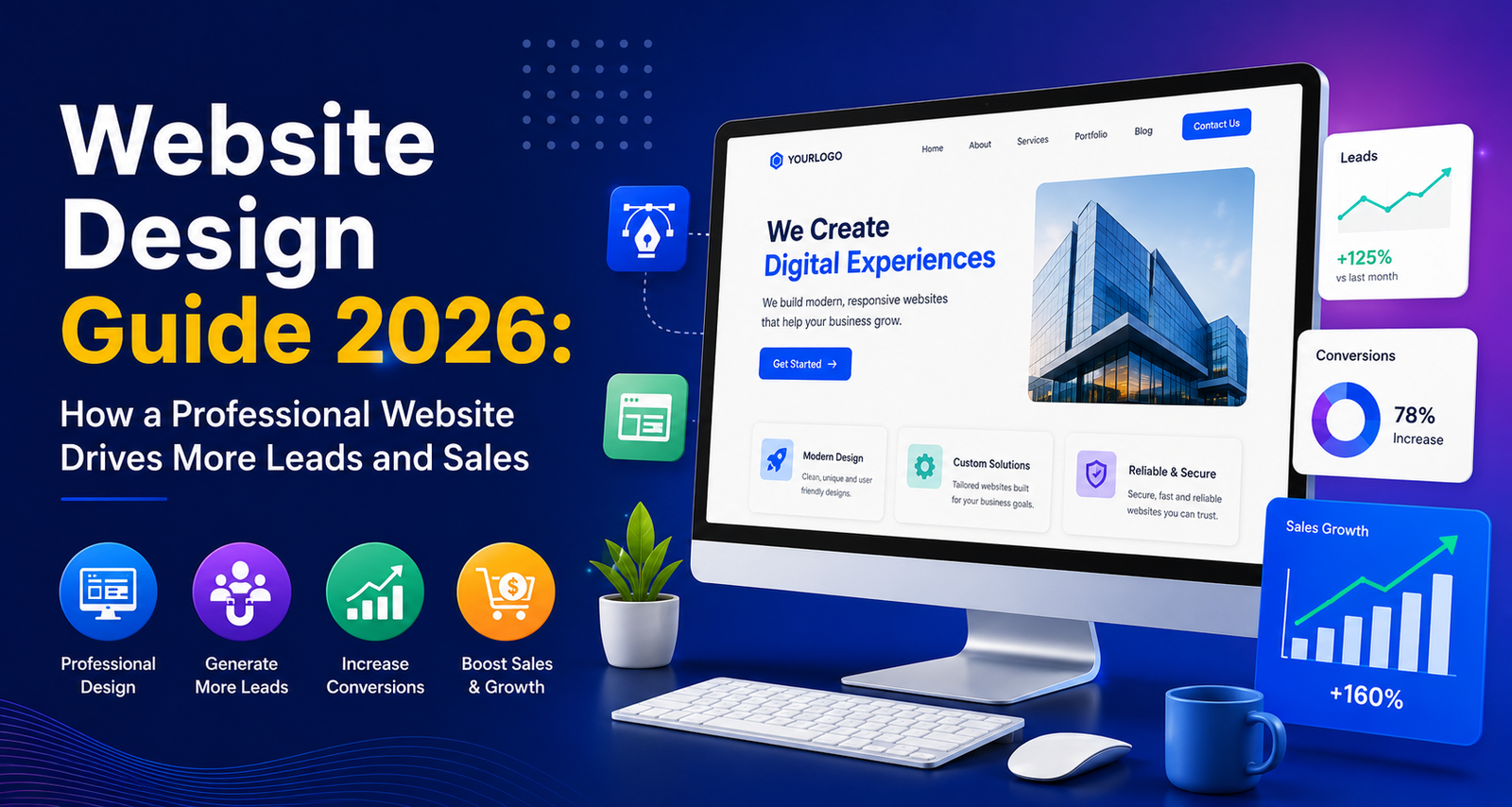
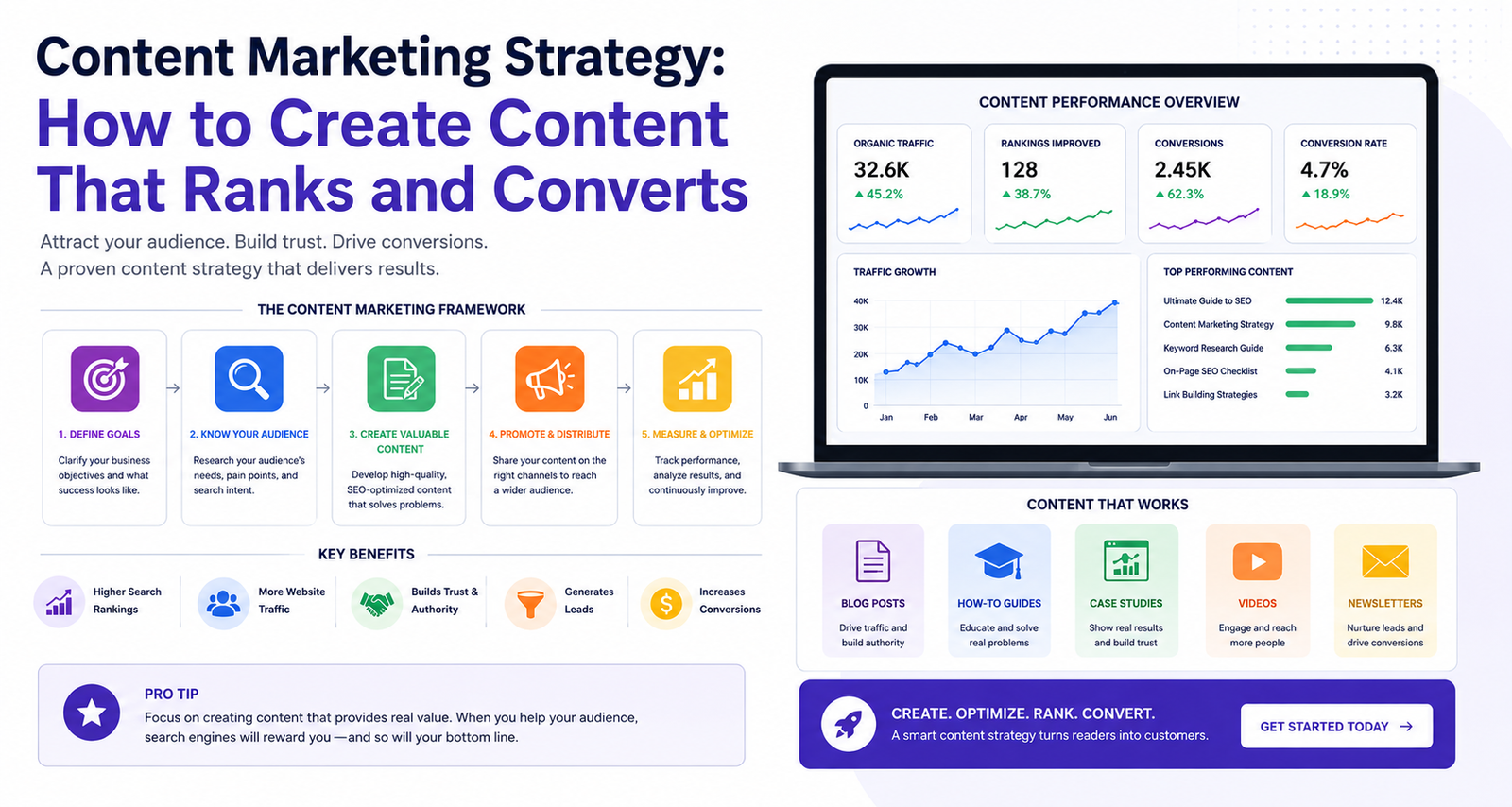
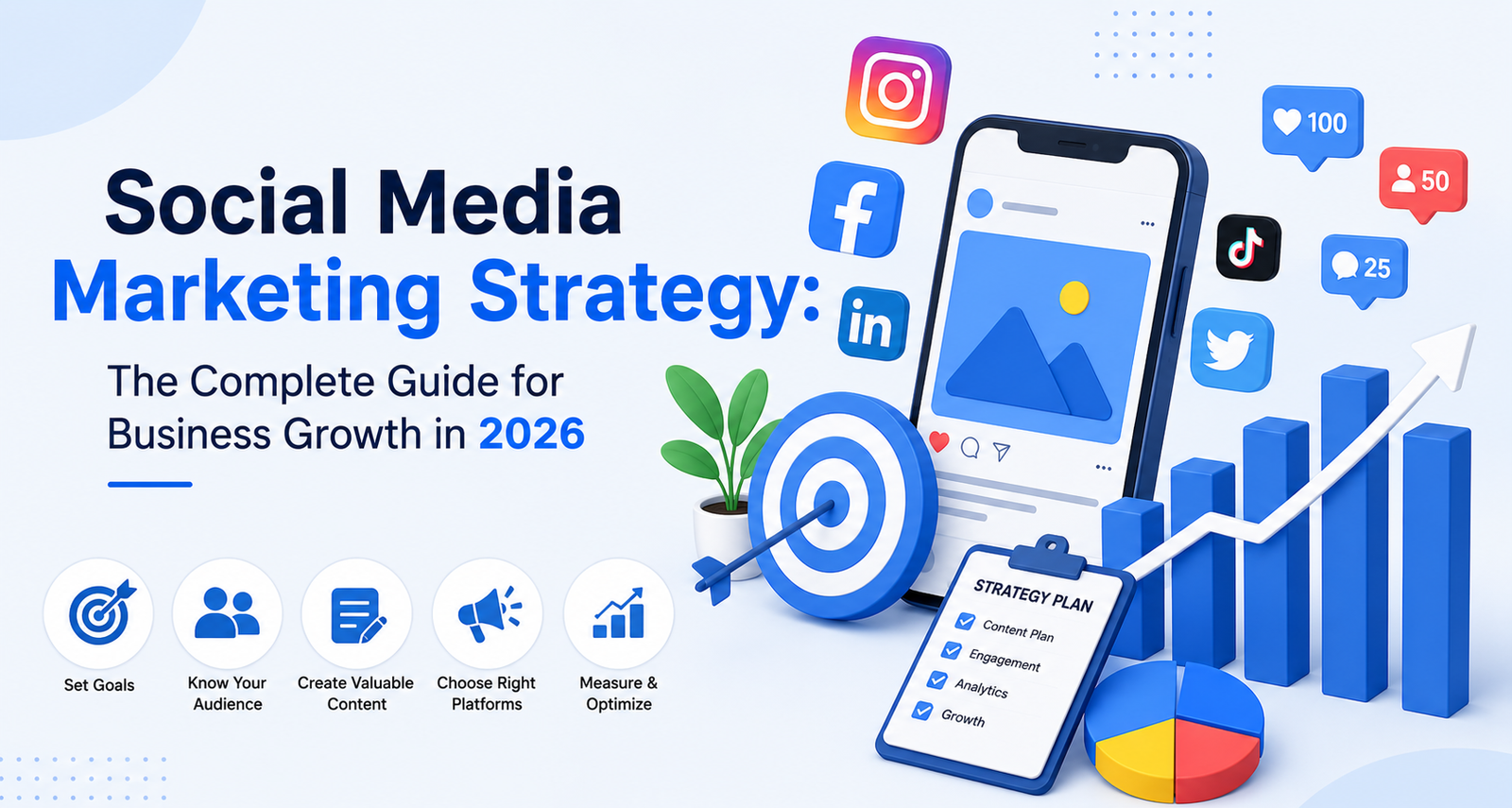
Your website is often the first real interaction a potential customer has with your business – and research consistently shows that users form an opinion about a site’s credibility within seconds of landing on it. In 2026, a slow, outdated, or confusing website doesn’t just look unprofessional; it actively costs you customers to competitors with a smoother experience.
With over 20 years of combined experience in web design and digital strategy, the SkyhawkBiz team has seen the direct correlation between website quality and business growth. This guide covers what actually makes a website perform – for users and for search engines alike.
Why Website Design Is a Business Growth Driver, Not Just Aesthetics
Website design isn’t only about looking polished – it directly impacts core business metrics:
- Conversion rate – how many visitors take a desired action (call, form fill, purchase)
- Bounce rate – how quickly visitors leave without engaging
- SEO performance – Google factors in page speed, mobile usability, and user experience as ranking signals
- Brand trust and credibility – a professional design signals legitimacy, while a dated or broken site raises doubt
- Ad campaign ROI – a poorly designed landing page wastes every dollar spent on PPC or social ads driving traffic to it
Core Elements of Effective Website Design
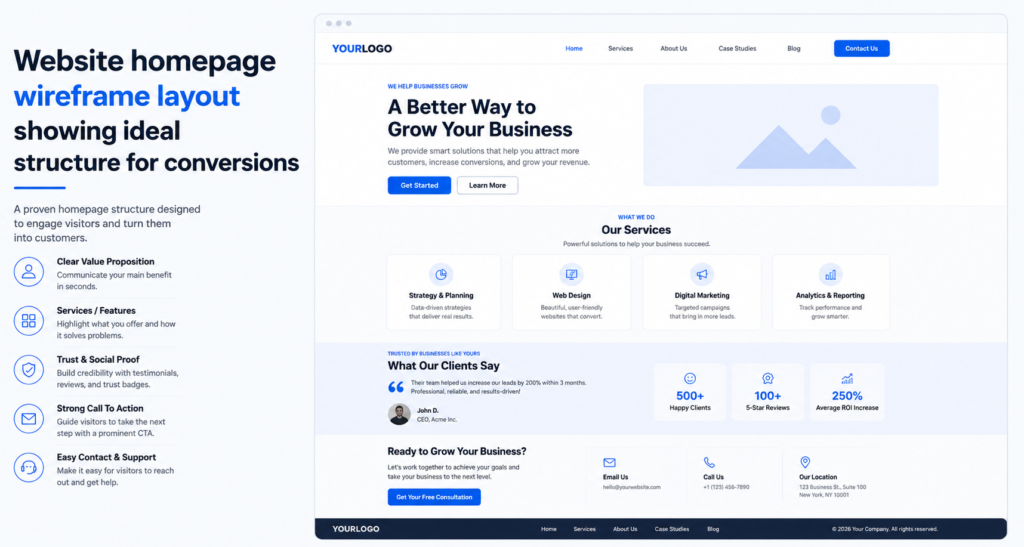
1. Mobile-First Responsive Design The majority of web traffic today comes from mobile devices, and Google uses mobile-first indexing to determine rankings. A responsive design that adapts seamlessly across devices isn’t optional – it’s foundational.
2. Page Speed Optimization Every additional second of load time increases the likelihood a visitor abandons the page. Key speed factors include image compression, efficient code, reliable hosting, and minimizing unnecessary scripts and plugins.
3. Clear, Intuitive Navigation Visitors should be able to find what they need within a few clicks. Overly complex menus, hidden contact information, or unclear service pages frustrate users and increase bounce rates.
4. Strong Visual Hierarchy Effective design guides the eye naturally toward the most important elements – headlines, calls-to-action, and key value propositions – using size, contrast, and whitespace strategically.
5. Compelling Calls-to-Action (CTAs) Every page should have a clear next step for the visitor, whether that’s “Request a Quote,” “Book a Consultation,” or “Shop Now.” Ambiguous or buried CTAs are one of the most common conversion killers.
6. Trust Signals Testimonials, client logos, certifications, security badges, and case studies reduce hesitation and build the confidence needed for a visitor to convert.
Website Design and SEO: Why They Must Work Together
A beautiful website that isn’t built with SEO in mind will struggle to be found at all. Design and SEO decisions should be made together, not in silos:
- Clean, semantic HTML structure helps search engines understand and index content correctly
- Optimized image file sizes and alt text improve both load speed and accessibility/SEO
- Proper heading hierarchy (H1, H2, H3) supports both readability and search engine content understanding
- Internal linking structure built into navigation and content helps distribute authority across important pages
- Schema markup implemented at the development stage strengthens rich result eligibility
Custom Website Development vs. Website Builders
Businesses often face this decision early on. Each approach has legitimate use cases:
Website builders (Squarespace, Wix, basic WordPress themes) – Faster and cheaper to launch – Suitable for simple sites with limited functionality needs – Can become limiting as business needs grow (custom integrations, advanced e-commerce, scalability)
Custom website development – Tailored exactly to business processes, branding, and functionality needs – Better long-term scalability and performance control – Typically delivers stronger SEO foundations due to cleaner code and full customization – Higher upfront investment, but often lower long-term cost when factoring in growth and flexibility
For most growing businesses beyond the very early startup stage, a professionally developed custom or semi-custom website (e.g., on WordPress with custom development) strikes the right balance between cost, flexibility, and performance.
E-Commerce Website Design Considerations
For businesses selling products online, additional design priorities apply:
- Streamlined checkout process – every additional step in checkout increases cart abandonment
- High-quality product imagery and detailed descriptions that reduce purchase hesitation
- Clear shipping, return, and security information visible before checkout
- Fast-loading product pages, since e-commerce visitors are especially impatient
- Mobile-optimized checkout, since a significant share of online purchases now happen on mobile devices
Common Website Design Mistakes That Hurt Conversions
- Slow load times caused by unoptimized images or excessive plugins
- Intrusive pop-ups that frustrate users before they’ve had a chance to engage
- Buried contact information – phone numbers and contact forms should be easy to find on every page
- Inconsistent branding across pages, creating a disjointed experience
- Ignoring accessibility standards, which excludes users and can create legal risk in some jurisdictions
- No clear value proposition above the fold, leaving visitors unsure why they should stay
How to Evaluate a Web Development Agency
When choosing a web design and development partner, look for:
- A portfolio of real, live client websites you can test yourself for speed and usability
- SEO-aware development practices built in from the start, not bolted on afterward
- Clear ownership and access to your own website files, hosting, and CMS after project completion
- Ongoing support and maintenance options, since websites require updates, security patches, and periodic refreshes
- Transparent timelines and pricing, avoiding vague scope that leads to costly change requests later
Measuring Website Performance After Launch
A launch is the beginning, not the end. Track:
- Page load speed via Google PageSpeed Insights or Core Web Vitals reports
- Bounce rate and average session duration by page
- Conversion rate for key actions (form submissions, calls, purchases)
- Mobile vs. desktop performance differences
- Organic traffic growth as SEO-friendly design compounds over time
Accessibility: A Growing Design Priority
Website accessibility – ensuring your site is usable by people with visual, auditory, motor, or cognitive impairments – has moved from a niche consideration to a mainstream design requirement. Beyond the ethical case for inclusive design, accessibility increasingly carries legal weight in many jurisdictions, and accessible design principles frequently overlap with strong SEO practices. Key accessibility fundamentals include:
- Sufficient color contrast between text and background
- Descriptive alt text on all images, which simultaneously supports SEO
- Keyboard navigability for users who cannot use a mouse
- Properly labeled form fields so screen readers can interpret them correctly
- Captions and transcripts for video content
Website Maintenance: What Happens After Launch
A website is never truly “finished.” Ongoing maintenance protects your investment and prevents small issues from becoming major problems:
- Regular software and plugin updates (for WordPress and similar CMS platforms) to patch security vulnerabilities
- Broken link audits to catch and fix links that break as pages are moved or removed over time
- Backup systems to protect against data loss from hacks, server issues, or human error
- Performance monitoring to catch page speed regressions before they impact rankings or conversions
- Security monitoring including SSL certificate renewal and malware scanning
Businesses that skip ongoing maintenance often see gradual performance decline – slower load times as content accumulates, broken functionality after CMS updates, and increasing vulnerability to security threats.
Frequently Asked Questions About Website Design
How much should a professional website cost? Costs vary significantly based on complexity, ranging from a few thousand dollars for a straightforward small business site to tens of thousands for custom-developed e-commerce or enterprise platforms with advanced functionality.
How long does it take to design and build a website? A typical small-to-medium business website takes 6 to 12 weeks from initial strategy through launch, while more complex custom builds or large e-commerce platforms can take several months.
Do I need a new website if my current one is a few years old? Not necessarily a full rebuild, but websites older than 3-4 years often have outdated design conventions, slower performance compared to modern standards, and may be missing mobile optimization improvements – a redesign or significant refresh is often worthwhile.
What’s the difference between web design and web development? Design refers to the visual layout, user experience, and branding elements, while development refers to the technical build – the actual coding and functionality that brings the design to life. Most professional projects require both working closely together.
Final Thoughts: Your Website Is Your Hardest-Working Employee
A well-designed, properly developed website works around the clock – generating leads, answering questions, and building trust even while your team is offline. Treating web design as a strategic investment rather than a one-time expense pays off in every other marketing channel, from SEO to PPC to social media.
At SkyhawkBiz, our web development team combines two decades of design and technical experience to build fast, conversion-focused websites that support long-term business growth.
Ready to see how your current website measures up? Get a free website audit from SkyhawkBiz.