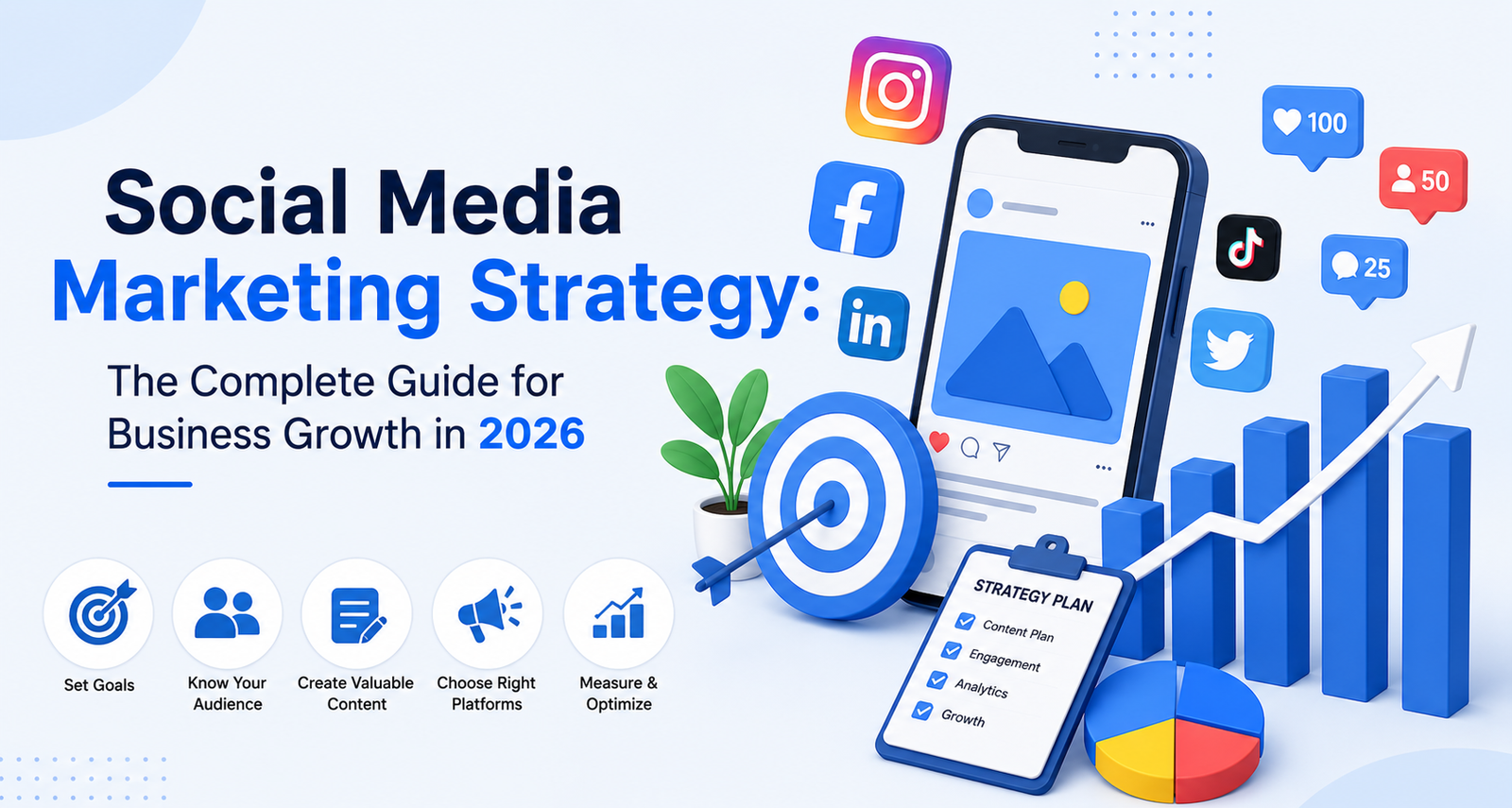
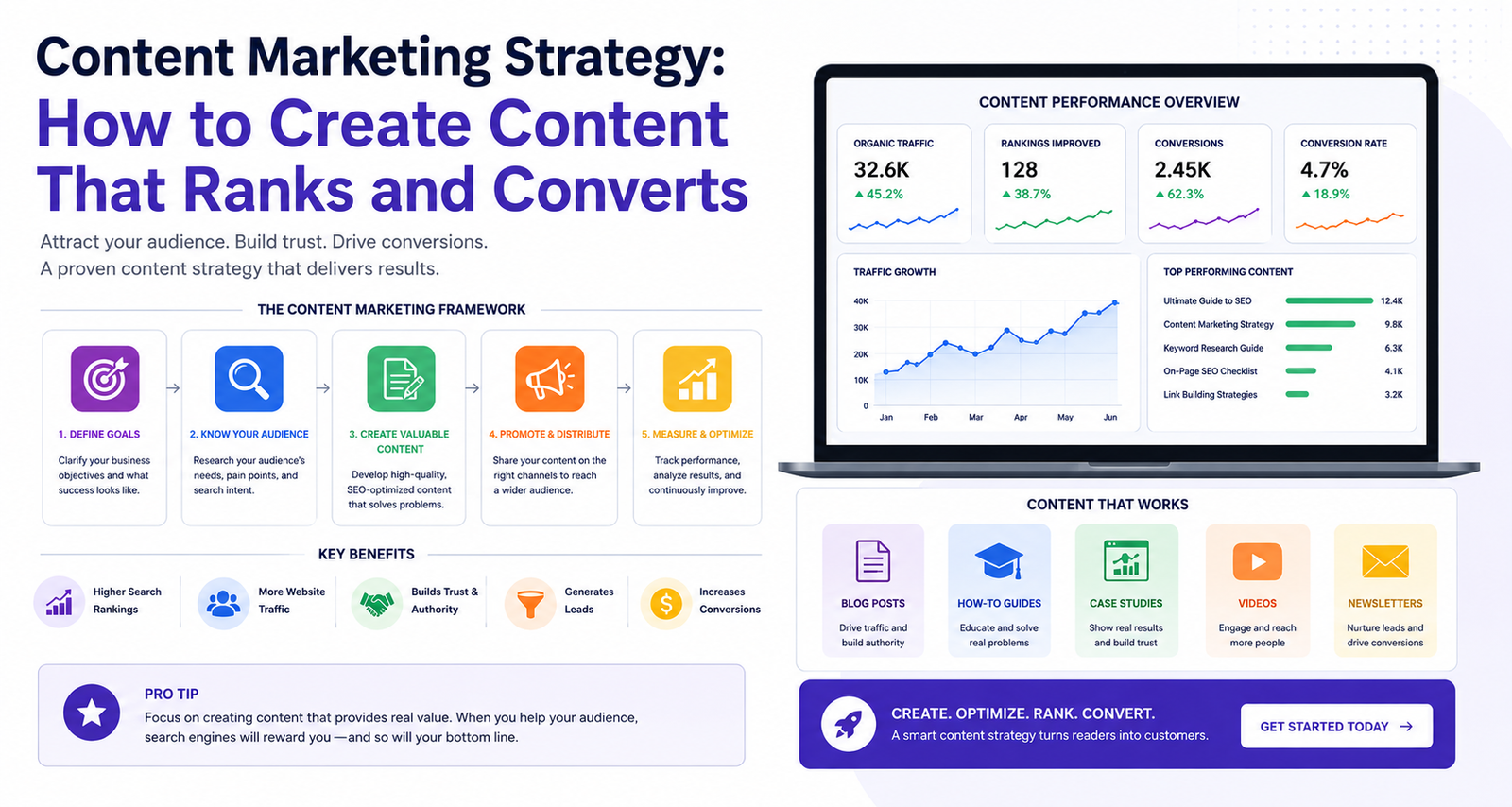
Social media has evolved from a “nice to have” brand presence into one of the most powerful channels for driving discovery, trust, and direct sales. But posting randomly and hoping for engagement isn’t a strategy – it’s guesswork. In 2026, successful social media marketing requires the same rigor as any other performance channel: clear goals, platform-specific tactics, and consistent measurement.
Drawing on more than 20 years of combined digital marketing experience, the SkyhawkBiz team has built social strategies for businesses across industries. This guide walks through exactly how to build a social media marketing strategy that drives real business results – not just vanity metrics.
Why Social Media Marketing Matters More Than Ever
Social platforms have become primary discovery engines – many consumers, particularly younger demographics, now search social platforms the way previous generations searched Google. Beyond discovery, social media directly influences purchase decisions through social proof: reviews, user-generated content, and influencer endorsement all shape buying behavior before a customer ever visits your website.
For businesses, social media marketing (often referred to as SMO – Social Media Optimization) now serves multiple functions simultaneously:
- Brand awareness and reach
- Direct customer service and community engagement
- Lead generation and e-commerce sales
- Reputation management and social proof
- Content distribution that supports SEO and overall brand authority
Step 1: Define Clear, Measurable Goals
Before creating a single post, define what success looks like. Common social media goals include:
- Brand awareness – measured through reach, impressions, and follower growth
- Engagement – measured through comments, shares, saves, and engagement rate
- Lead generation – measured through link clicks, form submissions, and DMs
- Sales – measured through social commerce conversions and attributed revenue
- Community/reputation – measured through sentiment, review volume, and response time
Each goal requires a different content mix and platform focus, so clarity here shapes everything downstream.
Step 2: Choose the Right Platforms for Your Business
Not every business needs to be on every platform. Spreading resources thin across five platforms often produces worse results than mastering two that align with your audience.
- Instagram – strong for visual brands, e-commerce, lifestyle, and younger demographics.
- Facebook – still highly effective for local businesses, community groups, and demographics 35+.
- LinkedIn – the standard for B2B marketing, thought leadership, and professional services.
- TikTok – unmatched organic reach potential, especially for discovery among Gen Z and increasingly millennial audiences.
- YouTube – the second-largest search engine globally, ideal for tutorials, brand storytelling, and long-form authority content.
- Pinterest – a strong, often overlooked channel for e-commerce, home goods, fashion, and DIY-adjacent industries.
Step 3: Build a Content Strategy, Not Just a Posting Calendar
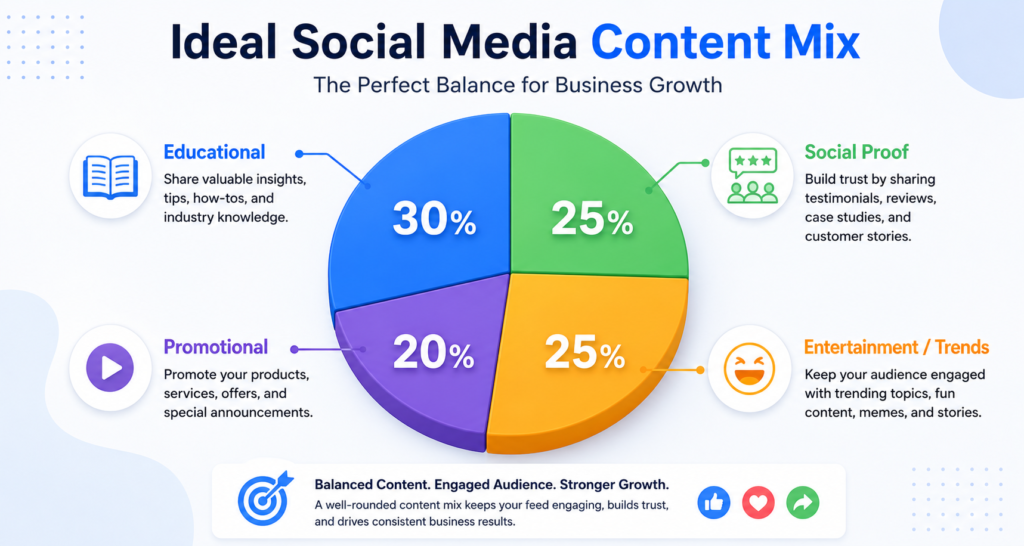
The businesses that win on social media treat content strategically, mixing formats and purposes rather than posting the same promotional content repeatedly. A balanced content mix typically includes:
- Educational content – tips, how-tos, and industry insights that build authority
- Behind-the-scenes content – humanizing the brand and building trust
- Social proof content – customer testimonials, reviews, and case studies
- Entertainment/trend-based content – leveraging platform trends and formats (especially on TikTok and Reels) for reach
- Promotional content – product launches, offers, and direct calls-to-action (kept to roughly 20% of total content)
Step 4: Prioritize Engagement Over Vanity Metrics
Follower count alone doesn’t pay bills. Platforms increasingly reward – and businesses should prioritize – genuine engagement:
- Comments and shares signal to platform algorithms that content is valuable, increasing organic reach
- Response time to comments and DMs affects both algorithmic favor and customer trust
- User-generated content (UGC) – encouraging customers to tag your brand – builds authentic social proof that outperforms branded content in trust and conversion
Step 5: Leverage Paid Social Strategically
Organic reach on most platforms has declined significantly over the years, making paid social amplification increasingly necessary for consistent visibility. Effective paid social strategy includes:
- Boosting top-performing organic posts rather than starting cold with new ad creative
- Retargeting website visitors with social ads to recapture interest
- Lookalike audience targeting based on existing customers or website converters
- Testing multiple creative formats – video consistently outperforms static images across nearly every platform
Step 6: Track the Metrics That Actually Matter
Move beyond follower count and vanity likes. Track:
- Engagement rate (engagements ÷ reach or followers)
- Click-through rate to your website
- Conversion rate from social traffic
- Follower growth rate over time (not just total followers)
- Share of voice relative to competitors
- Sentiment analysis of comments and mentions
Common Social Media Marketing Mistakes
- Posting inconsistently – algorithms favor accounts that post regularly and predictably
- Ignoring comments and messages, which damages both trust and algorithmic reach
- Using the same content across all platforms without adapting format or tone
- Chasing every trend without connecting it back to brand identity or goals
- No clear call-to-action, leaving engaged followers with no next step
How Social Media Marketing Supports SEO and Overall Growth
While social signals aren’t a direct Google ranking factor, social media indirectly supports SEO and broader digital marketing performance by:
- Increasing brand searches (a trust signal Google does recognize)
- Driving traffic that can improve engagement metrics on your website
- Building backlink opportunities when content is shared and picked up by other sites or journalists
- Extending content lifespan – a single blog post can be repurposed into a dozen social posts, maximizing content ROI
Choosing a Social Media Marketing Partner
Look for an agency that:
- Develops a platform-specific strategy rather than a one-size-fits-all posting schedule
- Provides transparent monthly reporting tied to business goals, not just impressions
- Has genuine experience with paid social advertising, not just organic posting
- Understands your industry’s audience behavior and content preferences
Building a Content Calendar That Actually Works
A content calendar keeps your social strategy organized and consistent, but an effective one goes beyond simply scheduling post dates. It should map:
- Content pillars – the 3-5 recurring themes your brand consistently posts about
- Platform-specific adaptation – the same core message reformatted for each platform’s format and audience expectations
- Posting cadence – a realistic, sustainable frequency rather than an ambitious schedule that collapses after a few weeks
- Key dates and campaigns – product launches, seasonal promotions, and industry events planned in advance
- Review and analysis checkpoints – built-in time to assess what’s working and adjust the following month’s plan accordingly
Influencer and Partnership Marketing
Influencer marketing has matured from a novelty into a core social media tactic, particularly effective when paired with organic and paid strategies. Rather than chasing the largest possible following, businesses increasingly see stronger ROI from:
- Micro and nano-influencers (typically 1,000–100,000 followers) who often have higher engagement rates and more authentic audience trust than mega-influencers
- Long-term partnerships rather than one-off sponsored posts, which build more genuine audience trust over time
- Local influencer partnerships for businesses with a local or regional customer base
- Employee advocacy programs, where team members share company content on their personal networks, often outperforming branded posts in organic reach
Frequently Asked Questions About Social Media Marketing
How often should a business post on social media? Consistency matters more than volume. Most businesses see solid results posting 3-5 times per week on primary platforms, though platforms like TikTok and Instagram Reels often reward higher frequency for accounts focused on rapid growth.
Which social media platform delivers the best ROI? It depends entirely on your audience and goals. B2B companies typically see the strongest ROI on LinkedIn, while e-commerce and lifestyle brands often perform best on Instagram, TikTok, and Pinterest.
Should small businesses invest in paid social advertising? Yes, in most cases. Organic reach alone has become increasingly limited on most platforms, and even a modest paid budget to boost proven organic content or retarget website visitors typically improves results significantly.
How do I measure if my social media marketing is actually working? Track engagement rate, website traffic from social referrals, and conversion rate from that traffic – not just follower count, which is a vanity metric that doesn’t directly correlate with revenue.
Final Thoughts: Strategy Beats Random Posting
Social media marketing succeeds when it’s treated as a strategic discipline – clear goals, the right platforms, a balanced content mix, and consistent measurement. Businesses that show up consistently, engage authentically, and track real performance metrics build lasting brand equity that translates into measurable business growth.
At SkyhawkBiz, our social media specialists bring over two decades of combined experience building strategies that turn followers into customers, not just numbers on a dashboard.
Ready to build a social media strategy that actually drives results? Get a free social media audit from SkyhawkBiz.